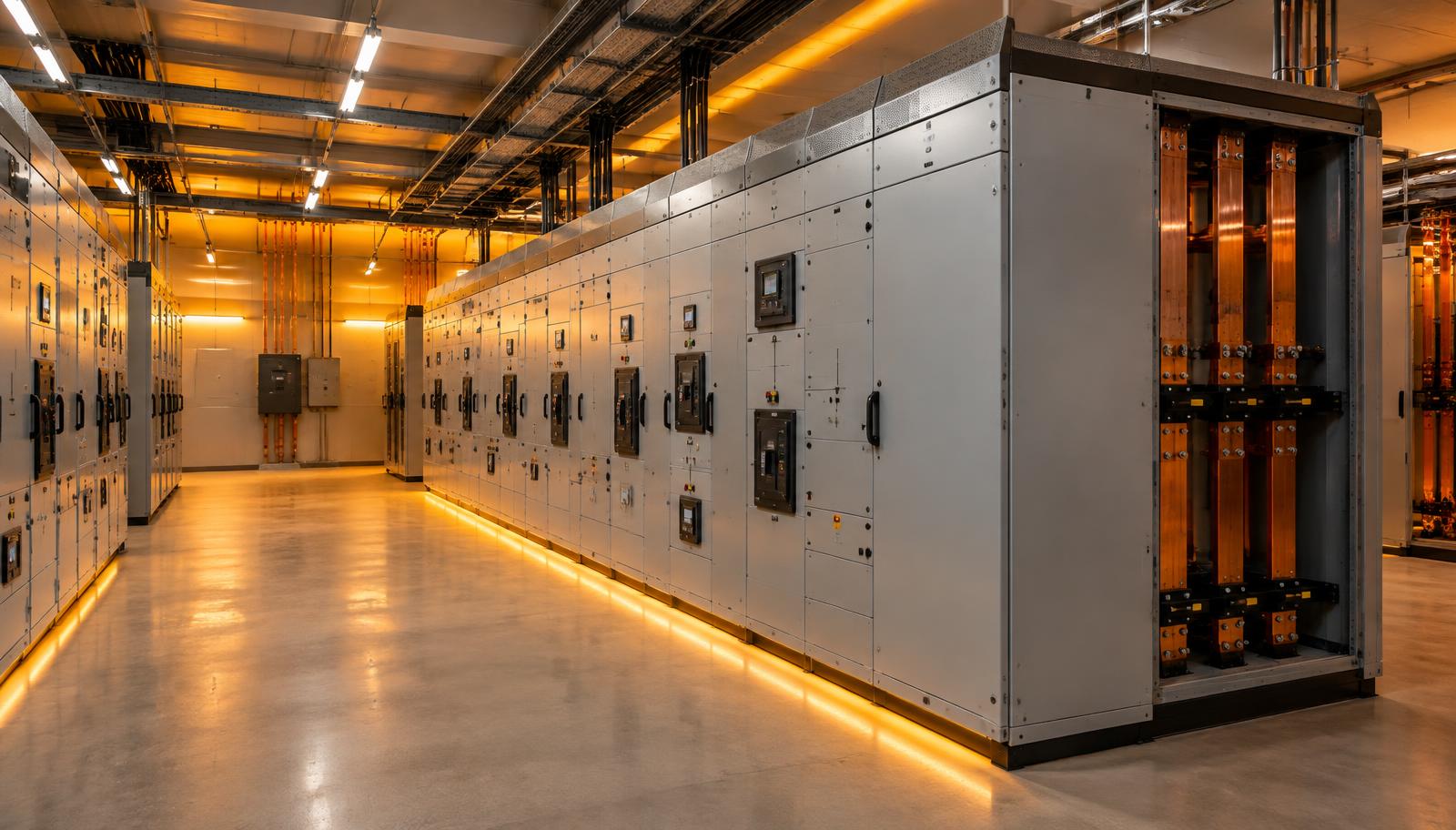
Motors
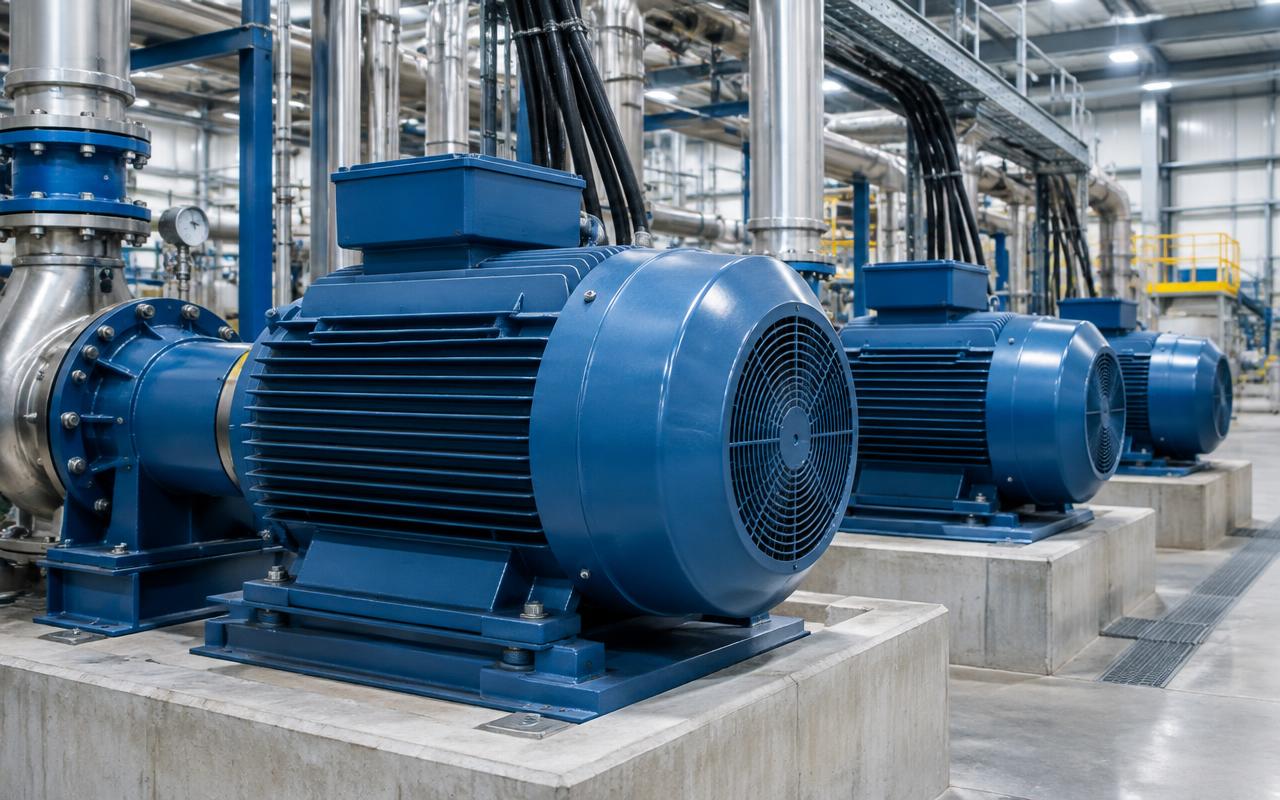
Three-phase induction motors run most of the pumps, fans, compressors and conveyors in US industry. When specifying one, check horsepower, synchronous speed (pole count), voltage, NEMA frame, enclosure, efficiency class and service factor. Start with Types of Three-Phase Motors, then use the Motor Selection Guide.
Transformers
Transformers change voltage levels, for example 480 V delta to 208Y/120 V wye. Key specifications are kVA rating, primary and secondary voltages, winding configuration, impedance (%Z), temperature rise, and dry-type vs. liquid-filled construction. Commercial transformers must also meet DOE efficiency rules. Details: Three-Phase Transformers Explained.
Variable frequency drives (VFDs)
A VFD controls motor speed by varying output frequency and voltage. On centrifugal fans and pumps, small speed reductions save a lot of energy, because power varies roughly with the cube of speed. Size drives by motor full-load amps and duty, not horsepower alone. See Choosing the Right VFD.
Panelboards, switchboards and switchgear
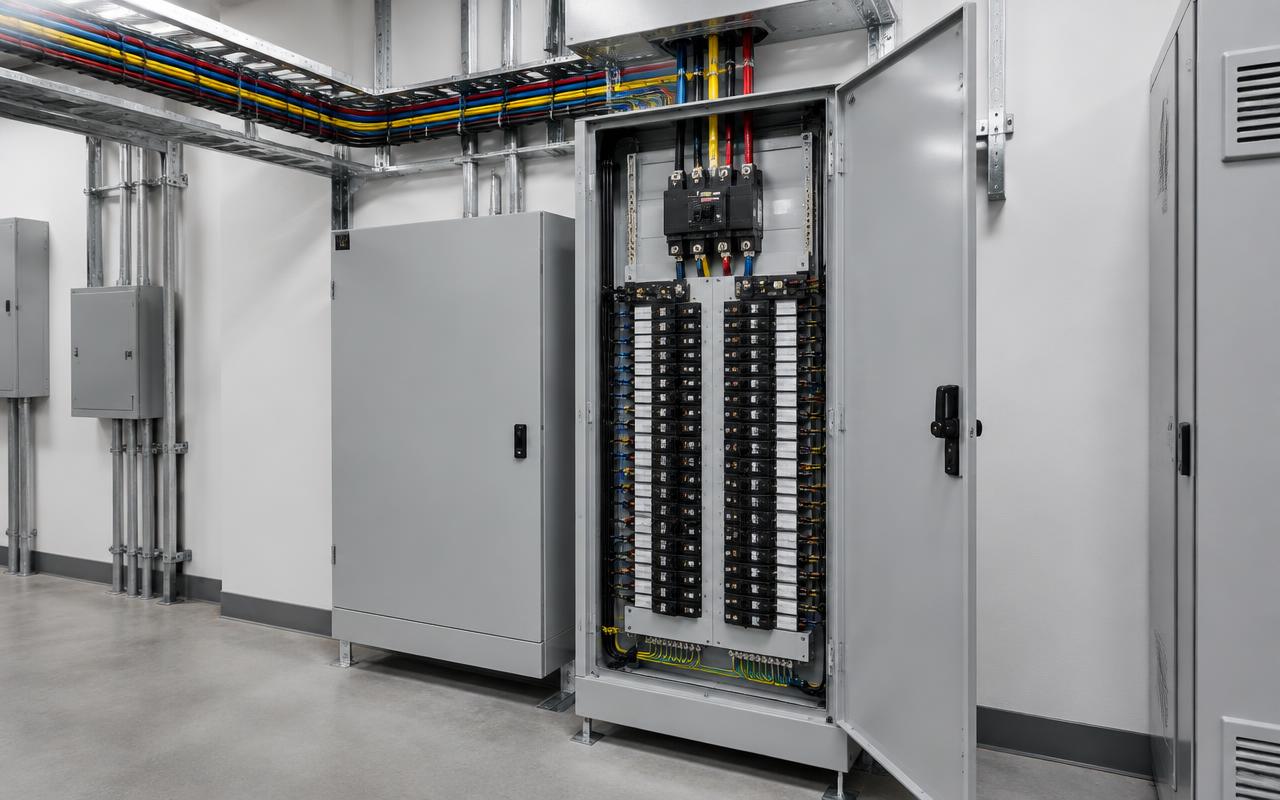
| Equipment | Typical rating | Role |
|---|---|---|
| Panelboard | Up to ~1,200 A, branch circuits | Feeds lighting, receptacles and smaller loads |
| Switchboard | Up to ~6,000 A | Main service and feeder distribution |
| Low-voltage switchgear | Up to ~6,000 A, drawout breakers | Critical, maintainable distribution with higher withstand ratings |
| Motor control center (MCC) | Bucket-based | Groups starters, drives and controls for many motors |
Check the short-circuit current rating (SCCR or AIC) against available fault current, and confirm the bus rating, enclosure type and listing. Aging gear is covered in Industrial Panel Upgrades.
Generators and transfer switches
Standby generators protect critical loads when utility power is lost. Size them for running kW, motor starting kVA and voltage dip limits, and pair each with an automatic transfer switch (ATS). See Generator Sizing.
Protection and power quality
- Circuit breakers and fuses, coordinated so the device closest to a fault trips first
- Motor overload relays and phase-loss/phase-unbalance monitors
- Surge protective devices (SPDs) at the service and sensitive panels
- Capacitor banks and filters, covered in Power Factor Correction
Need help sourcing?
Once you know what you need, our Equipment Sourcing service can help you find suitable suppliers. You can also check quick answers in our Equipment FAQs.