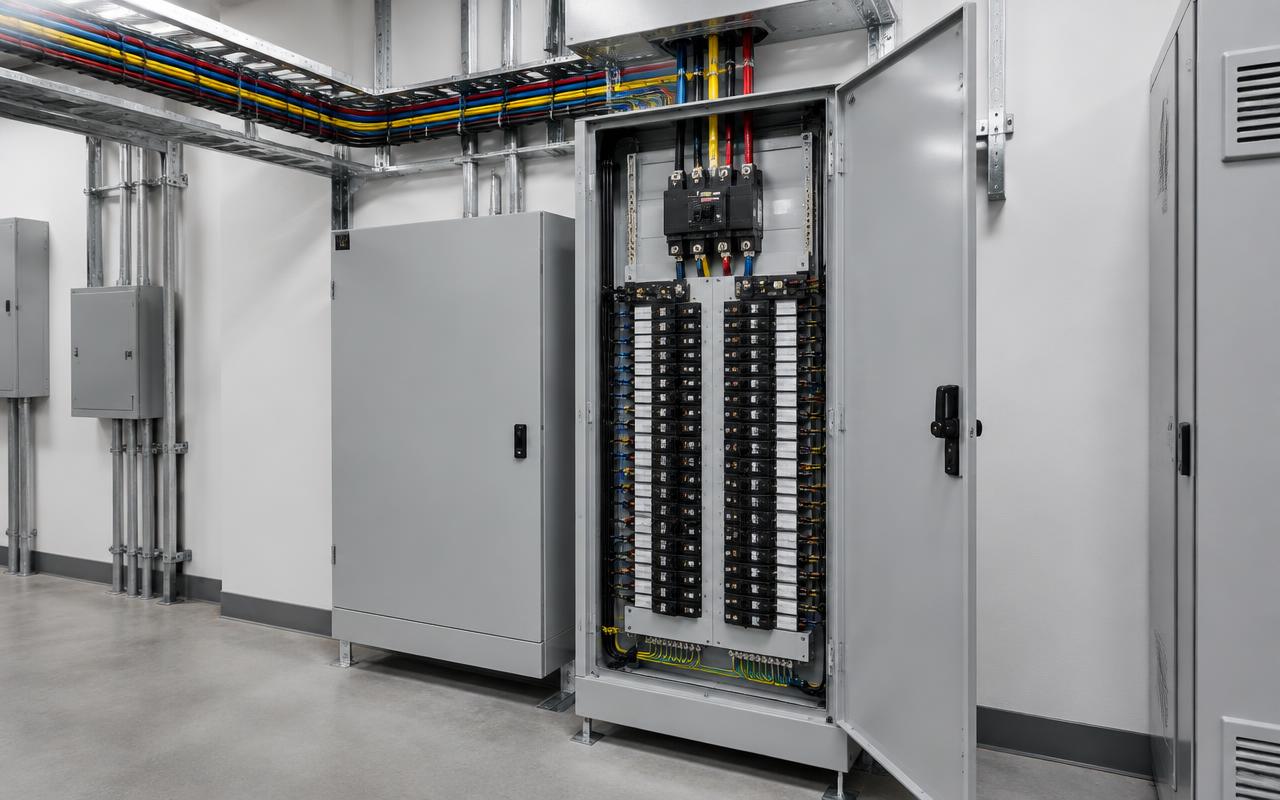
What a VFD does
A VFD rectifies incoming AC to DC, then uses fast-switching transistors (IGBTs) to build a variable-frequency, variable-voltage output. Lowering frequency slows the motor. Ramped starting avoids the 6–8× inrush of across-the-line starts.
Sizing checklist
- Motor FLA: drive continuous output amps ≥ motor nameplate full-load amps.
- Duty: Normal duty (variable torque, ~110% for 60 s) vs. heavy duty (constant torque, ~150% for 60 s). Conveyors, mixers and positive-displacement pumps usually need heavy duty.
- Input supply: voltage class (208/240, 480, 600 V). Single-phase input usually means derating the drive, often by about 50%; follow the manufacturer's tables.
- Altitude and ambient: derate above about 3,300 ft (1,000 m) or in high ambient temperatures.
- Multiple motors on one drive: size for the sum of FLAs and give each motor its own overload protection.
Environment and enclosure
Specify NEMA 1 for clean indoor rooms, NEMA 12 for dusty industrial areas and NEMA 4X for washdown or outdoor use. Keep heat dissipation in mind, typically 2–3% of drive rating, when mounting in panels.
Power quality and motor protection
- Input harmonics: line reactors, DC link chokes, passive filters, or active-front-end and 18-pulse drives where IEEE 519 limits apply. See Common Problems.
- Long motor leads: voltage reflection can stress insulation. Use load reactors or dV/dt or sine filters per the manufacturer's maximum cable length.
- Motor: inverter-duty insulation, and shaft grounding rings or insulated bearings to prevent bearing fluting.
Control features
- Control mode: V/Hz for fans and pumps; sensorless vector or closed-loop for precise torque
- Built-in PID, sleep/wake and multi-pump logic for pumping
- Communications: BACnet, Modbus, EtherNet/IP, PROFINET
- Bypass contactors for critical HVAC, and safe torque off (STO) for machine safety
Use the Power Calculator to estimate motor current from kW, or read the Equipment Guide for context.