1. Constant power delivery
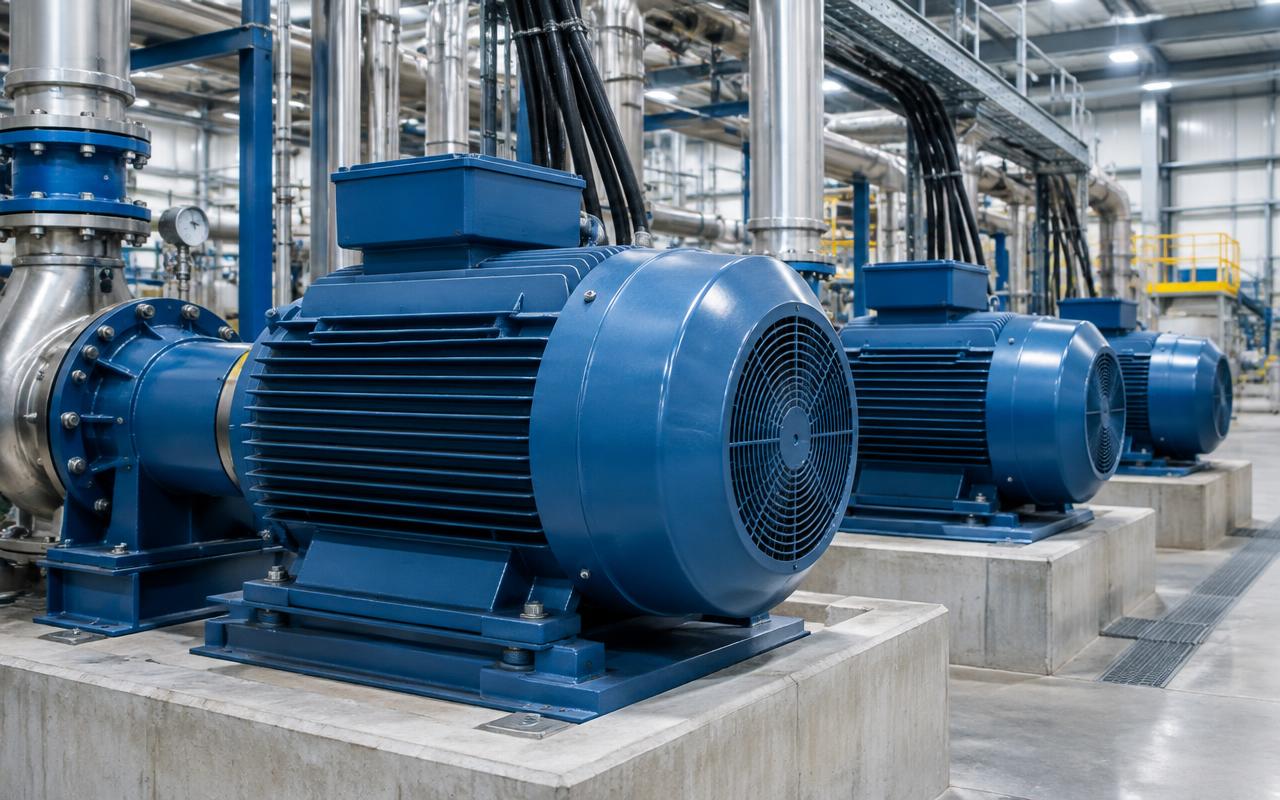
In single-phase circuits, instantaneous power pulses from zero to peak 120 times per second. In a balanced three-phase circuit, the sum of the three phases' power is constant. Motors therefore produce steady torque, with less vibration, noise and mechanical wear on couplings and bearings.
2. Conductor efficiency
Delivering a given amount of power at a given line voltage takes less total conductor in three-phase than in single-phase. Smaller conductors and conduits cut material and installation costs, a saving that grows on long feeders and large services.
3. Simpler, more efficient motors
Three phases naturally create a rotating magnetic field, so a three-phase induction motor starts on its own without capacitors or centrifugal switches. Three-phase motors are generally smaller, more efficient and longer-lived than single-phase motors of the same horsepower, and they are the standard above a few horsepower. See Types of Three-Phase Motors.
4. Flexible voltages from one service
A 4-wire wye service supplies both three-phase power for equipment and single-phase power for lighting and receptacles. With 480Y/277 V, for instance, 277 V lighting runs directly while transformers derive 208Y/120 V for general-purpose loads.
5. Room to grow
Three-phase services scale to the thousands of amps that large facilities need, and they match the equipment manufacturers build for commercial and industrial markets: chillers, VFD-driven pumps, EV fast chargers and more.
| Factor | Single-phase | Three-phase |
|---|---|---|
| Power delivery | Pulsating | Constant (balanced load) |
| Motor starting | Needs auxiliary means | Self-starting |
| Practical motor size | Typically up to a few hp | Fractional to thousands of hp |
| Conductor use for same power | Higher | Lower |
| Service cost | Lower | Higher upfront |
Are there downsides?
Three-phase service costs more to install, and equipment is pricier at small sizes. It also needs careful load balancing across phases. A site with only lighting and small appliances rarely needs it. For a decision checklist, read Single-Phase vs. Three-Phase Power.